
Contract Testing for Microservices: Where It Fits in a Shift-Left Testing Strategy

Updated: Jun 8
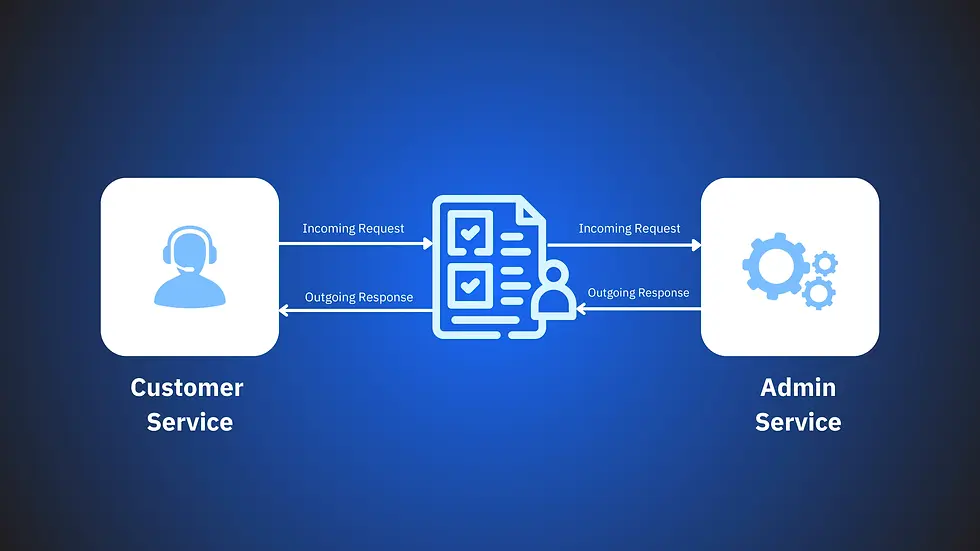
Microservices promise faster releases, independent deployments, and greater team autonomy. Engineering organizations adopt them to reduce bottlenecks and allow teams to move quickly without coordinating every change across the entire application.
The reality is often more complicated.
A change that appears safe inside one service can unexpectedly affect another service that depends on it. An API response changes, a field is renamed, or a dependency behaves differently than expected. Everything passes local tests, yet the issue surfaces later during integration testing or, worse, after deployment.
As microservice ecosystems grow, identifying these risks becomes increasingly difficult. Teams need ways to catch problems before they reach downstream environments.
That is why shift-left testing has become a core practice for modern engineering teams. Instead of waiting for integration environments to expose issues, developers look for signals much earlier in the development lifecycle.
AI-powered code review tools such as HyperTest help uncover potential integration risks during pull request review. Contract testing adds another layer of confidence by validating agreements between services. Together, these practices help teams build reliable systems without relying solely on large end-to-end test suites.
Why Traditional Testing Struggles with Microservices
The traditional testing pyramid was designed for monolithic applications where most functionality lived inside a single codebase.
In microservices architectures, the challenge changes. Individual services may work perfectly in isolation, yet failures emerge when those services interact.
Growing Integration Complexity
Unit tests provide confidence that a service behaves correctly on its own. As the number of services, APIs, and dependencies increases, that confidence becomes more localized.
A service can pass every unit test while still breaking a downstream consumer.
The risk is no longer limited to internal logic. It extends to communication between services.
Challenges with end-to-end Testing
Many teams attempt to solve this problem through end-to-end testing.
While E2E tests remain valuable, they often become difficult to maintain in large microservice environments. Test environments require multiple services to be available, failures can be difficult to debug, and execution times increase as systems grow.
Engineers frequently spend time investigating environment issues instead of actual product defects.
The result is a slower feedback loop and reduced developer productivity.
Shift-left Testing for Microservices
Integration failures rarely begin in testing environments.
They begin when a developer introduces a change that alters behavior another service depends on.
A modified API response, an updated request schema, or a dependency change can create downstream issues long before deployment occurs.
This is where shift-left testing provides value.
By moving validation closer to the point where code is written, teams reduce the cost and effort required to resolve problems.
Pull requests represent one of the earliest opportunities to identify integration risks.
HyperTest extends the review process by analyzing code changes, API modifications, dependency updates, and service interactions before code is merged. Developers receive actionable feedback while the context of the change is still fresh.
This approach complements existing testing practices rather than replacing them.
Unit tests validate implementation logic.
Contract tests validate service agreements.
Integration tests validate system behavior.
AI code review helps identify risky changes before they reach any of those stages.
What is Contract Testing?
Contract testing verifies that two services interact according to an agreed set of expectations.
Rather than testing an entire application flow, contract testing focuses on the communication boundary between services.
A contract defines how a consumer interacts with a provider, including requests, responses, payload structures, and expected behavior.
As long as both services adhere to the contract, teams can evolve their systems independently with greater confidence.
Contract testing occupies the space between isolated component tests and full integration tests.
It allows teams to validate service interactions without spinning up complete environments, making it particularly useful in microservice architectures.
How Contract Testing Works
Contract testing involves two parties:
Consumer: The service using an API or dependency.
Provider: The service exposing that API.
The contract captures the expectations between these services and serves as a shared agreement.
There are two common approaches.
Consumer-driven Contracts
In consumer-driven contract testing, the consumer defines the expected interactions.
The contract specifies the requests the consumer will make and the responses it expects to receive.
The provider then validates that it can satisfy those expectations.
This model gives consuming teams greater control over critical dependencies and helps prevent unexpected changes from breaking applications.
Provider-driven Contracts
In provider-driven contract testing, the service owner defines the contract.
Consumers validate their implementations against the provider's specifications.
This approach allows service owners to establish standards and ensure consistency across multiple consumers.
Benefits of Contract Testing
Faster Feedback
Contract tests focus on service interactions instead of full workflows, making them faster to execute than end-to-end tests.
Easier Maintenance
Teams can validate specific service agreements without understanding every part of a larger distributed system.
Simplified Debugging
When a contract test fails, the source of the issue is usually clear. Engineers can identify whether the problem exists in the consumer or provider implementation.
Independent Development
Teams gain confidence that changes remain compatible with dependent services, reducing coordination overhead.
Stronger Shift-left Validation
Contract testing becomes even more effective when combined with PR-level analysis. AI code review can identify risky changes before merge, while contract tests verify that service agreements remain intact.
Common Use Cases for Contract Testing
Service-to-service Communication
Microservices frequently exchange data through APIs and events.
Contract testing verifies that these interactions continue working as services evolve independently.
Third-party API integrations
Applications often rely on external APIs for payments, messaging, authentication, and other functions.
Contract tests help detect compatibility issues before they affect production systems.
Frontend and Backend Interactions
Contract testing can validate agreements between frontend applications and backend services, helping teams detect breaking API changes earlier.
Contract Testing vs Integration Testing
Contract testing and integration testing solve different problems.
Contract tests verify that services adhere to agreed interfaces and expected interactions.
Integration tests validate behavior across connected systems operating together.
Contract Testing | Integration Testing |
Focuses on service agreements | Focuses on complete interactions |
Faster execution | Slower execution |
Can run in isolation | Requires integrated environments |
Easier to maintain | More susceptible to environmental failures |
Validates communication boundaries | Validates end-to-end behavior |
Neither approach replaces the other.
Teams often use contract testing, integration testing, and AI-assisted code review together to reduce the risk of production failures.
Catching Integration Risks Earlier
Contract testing validates agreements after contracts have been established.
Many integration issues originate earlier in the software development lifecycle.
API modifications, dependency upgrades, schema changes, and service behavior updates often appear first in pull requests.
HyperTest helps engineering teams identify these risks before code is merged by analyzing changes and highlighting potential downstream impact.
Developers receive feedback during review rather than discovering issues days later during integration testing.
This creates a stronger shift-left workflow where problems are identified sooner and fixed with less effort.
Tools for Contract Testing
Several tools help teams implement contract testing in microservices environments.
Pact
Pact is one of the most widely adopted contract testing frameworks.
It follows a consumer-driven approach, allowing consumers to define expectations and providers to validate compliance.
Pact supports multiple programming languages, making it suitable for polyglot environments.
Spring Cloud Contract
Spring Cloud Contract is designed primarily for Java and Spring Boot applications.
It uses a provider-driven model and automates test generation from contract definitions.
For organizations heavily invested in the Spring ecosystem, it provides a streamlined approach to contract testing.
Building reliable microservices requires multiple layers of validation.
Unit tests verify implementation logic. Contract tests validate service agreements. Integration tests confirm behavior across connected systems.
AI-powered code review adds another layer by identifying risky changes before they move downstream.
A strong shift-left strategy combines these practices to reduce integration failures, accelerate feedback loops, and help teams ship changes with greater confidence.
Frequently Asked Questions
1. What is contract testing in microservices?
Contract testing verifies that two services communicate according to agreed expectations. It helps ensure API consumers and providers remain compatible as services evolve independently.
2. How is contract testing different from integration testing?
Contract testing validates service agreements and API interactions in isolation. Integration testing verifies that multiple components work correctly together in a running environment.
3. Where does contract testing fit in a shift-left strategy?
Contract testing helps teams validate service interactions earlier in the development lifecycle. It works alongside pull request reviews, unit tests, and automated quality checks to catch issues before deployment.
4. Can AI code review replace contract testing?
No. AI code review and contract testing address different problems. AI code review helps identify risky code changes during pull requests, while contract testing verifies that service agreements remain valid.
5. Why are pull requests important for microservices testing?
Pull requests are often the earliest point where API changes, dependency updates, and integration risks become visible. Reviewing these changes before merge helps teams catch issues before they reach integration environments.


Comments